project—Monterrey, N.L., México | 13.05.26
Growth and harmony shaped through light
Aurea
A modular light inspired by the golden ratio
where proportion, rhythm, and light create a balanced presence
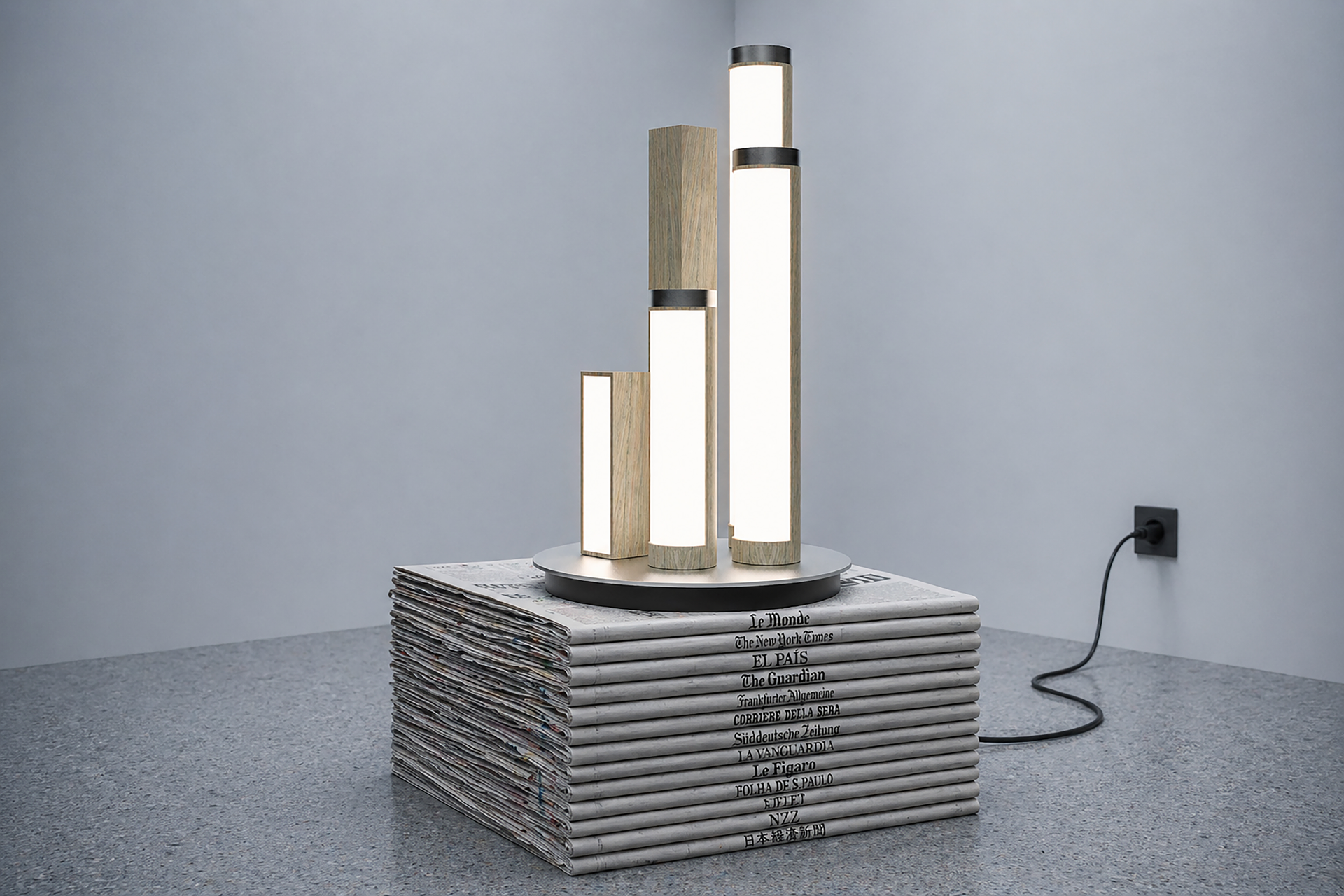
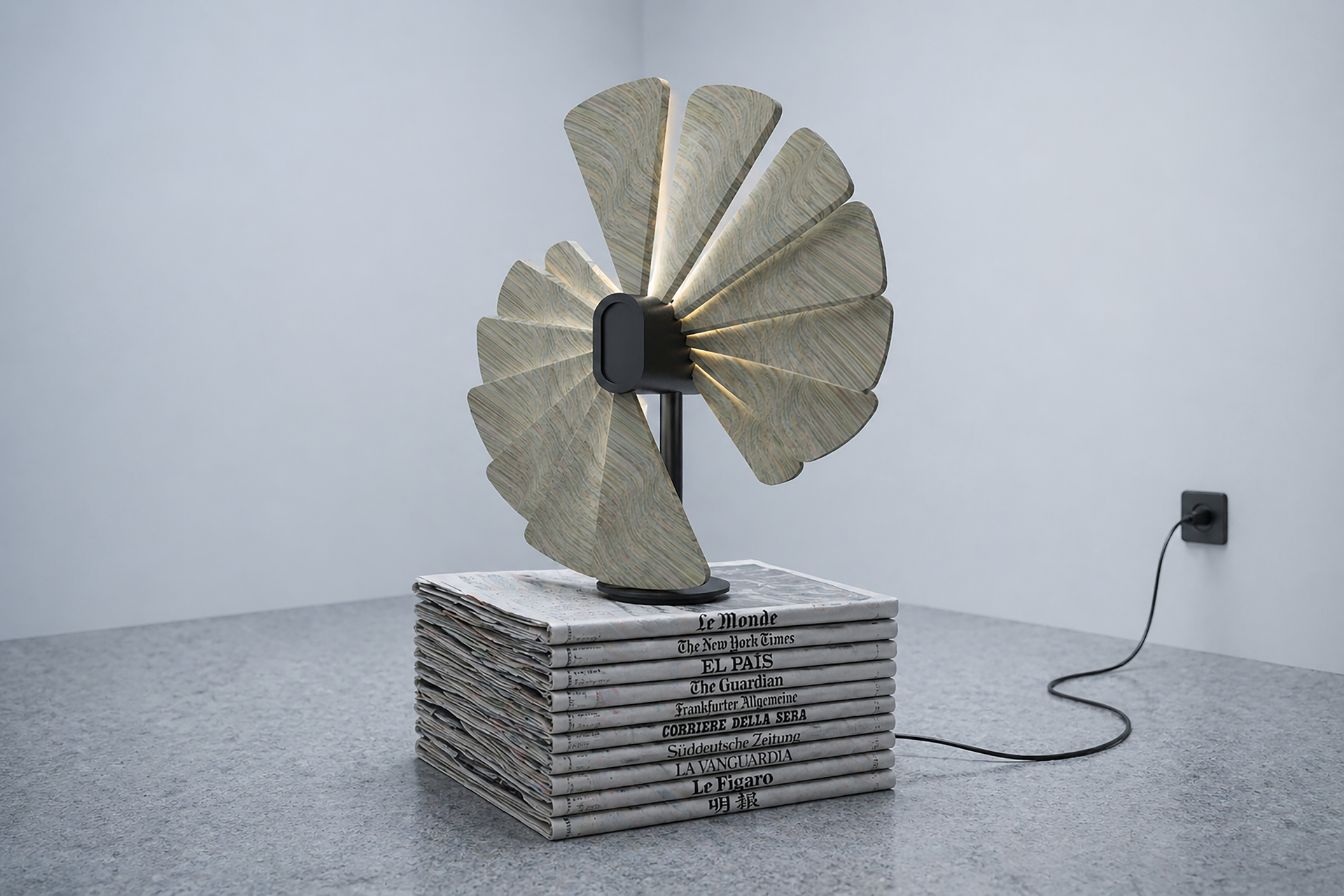
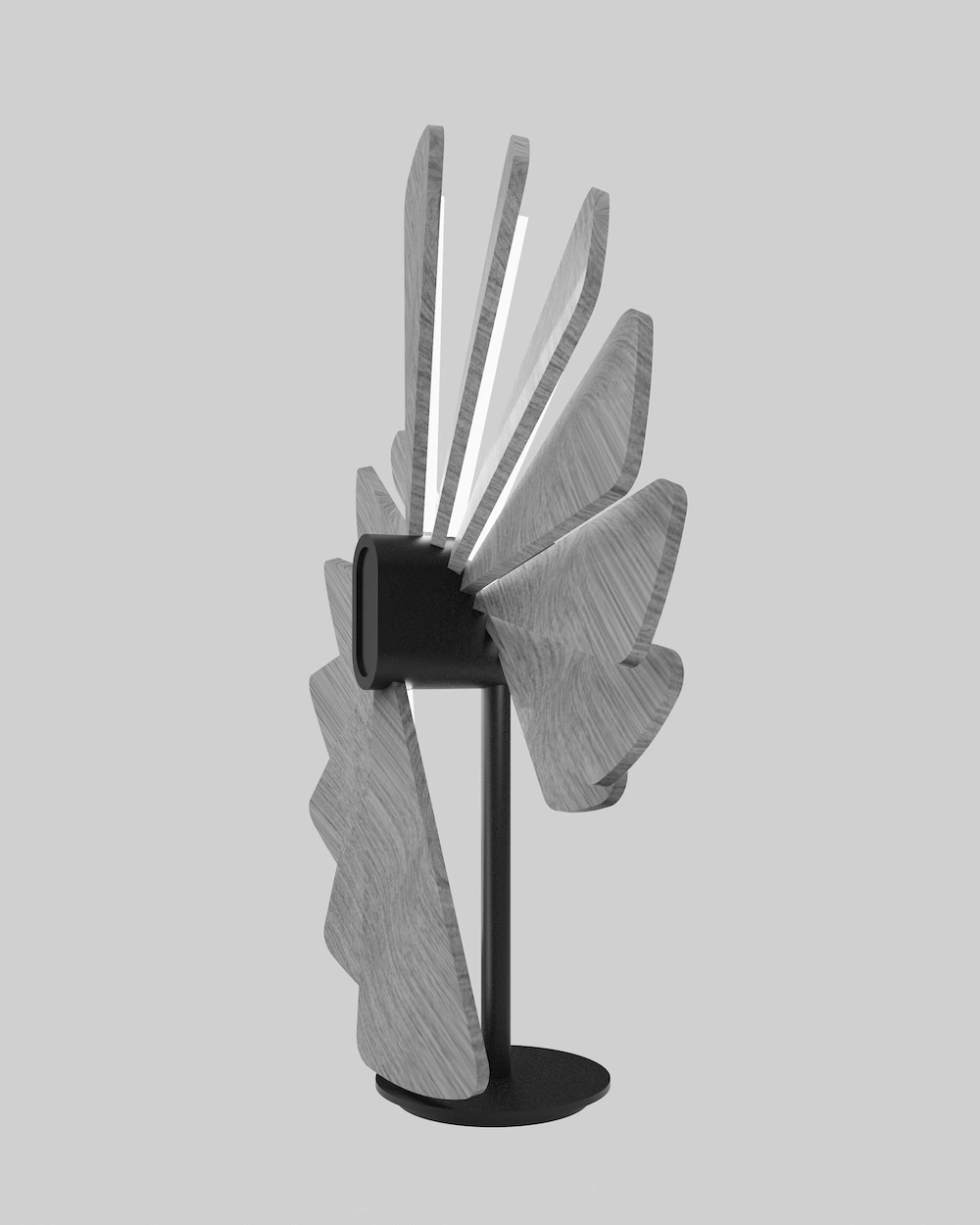
Áurea is not simply a light fixture. It is a translation of an invisible order, a system where proportion becomes experience and harmony emerges through growth. Rooted in the logic of the Golden Ratio, the piece interprets a principle that has historically guided both natural formations and human perception. From this reference, Áurea does not replicate a formula, but transforms it into a spatial composition where balance is perceived rather than measured.
The structure unfolds through a sequence of modules that increase and decrease in scale, following a rhythm of progression. This gradual transformation creates a visual flow that guides the eye, allowing the observer to intuitively navigate the piece. As in nature, growth is not abrupt, but continuous, and it is within this continuity that harmony is constructed.
Light interacts with this system as an active element. It passes through the spaces between modules, expanding and diffusing as it moves along the structure. Shadows emerge softly, reinforcing depth and accentuating the transitions between volumes. The result is not a fixed illumination, but a dynamic interplay between light and form.
the piece
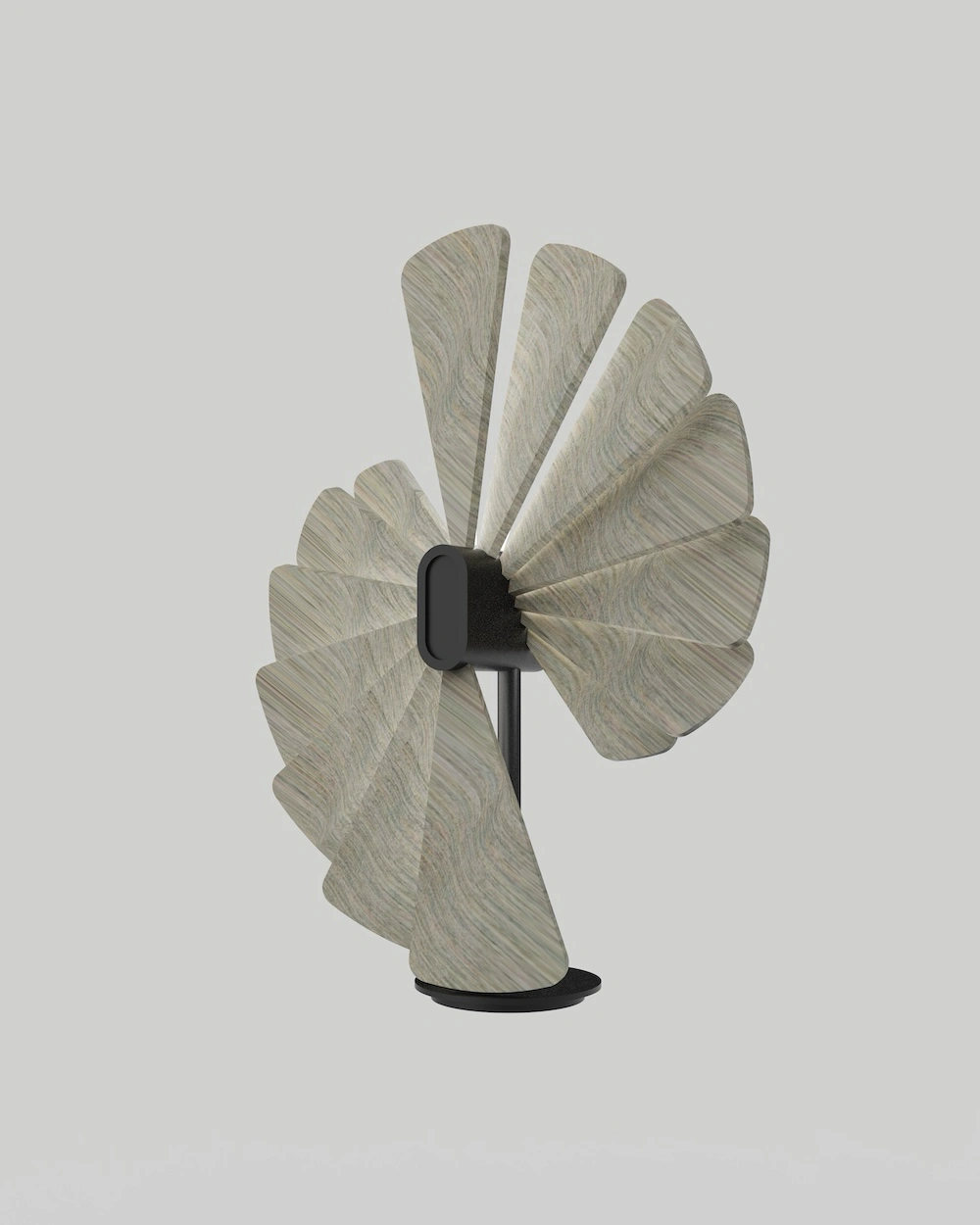
The piece is composed of fourteen modules made of newspaper wood, with dimensions ranging from 17 cm to 10 cm. This variation allows light to pass gradually between modules, creating soft lighting and shadow effects. The structure is organized around a central axis and a base made of ABS resin, providing stability and strength. The support is a 1/2” aluminum tube, offering lightness and durability. It also integrates a dimmer that lets users adjust light intensity as needed, creating an adaptable and personalized experience.
process
The development of the light fixture began with the digital modeling of the central axis in Rhinoceros and Grasshopper, which allowed for the precise definition of the module angles and their spatial relationship. From this model, 3D printing tests were conducted to evaluate the shape, assembly, and interaction between the parts in a controlled way.
Subsequently, the base was designed, seeking an optimal solution in terms of stability, proportion, and visual balance within the overall composition. During the prototyping phase, different materials and processes were explored. The parts were 3D printed to validate geometries, test tolerances, and implement adjustments, while the modules were manufactured from MDF to analyze their structural and visual behavior under real conditions. This iterative process allowed for the refinement of both the design and the construction, ensuring functionality, formal coherence, manufacturing feasibility, and a consistent user experience.
designers
Maria Virginia Andrade
Natalia Magallanes
Galia Fuentes
Daniela Huerta
specs
Modules: Newspaper wood
Base: ABS resin
Structure: 1/2” aluminum tube
Lighting: Warm LED system with integrated dimmer
projects—Monterrey, N.L., México | 13.05.26
projects