project—Monterrey, N.L., México | 13.05.26
where balance exists only through tension
kinko
captureing the fragile negotiation between stability and collapse
using light, form, and counterweight to materialize tension in space
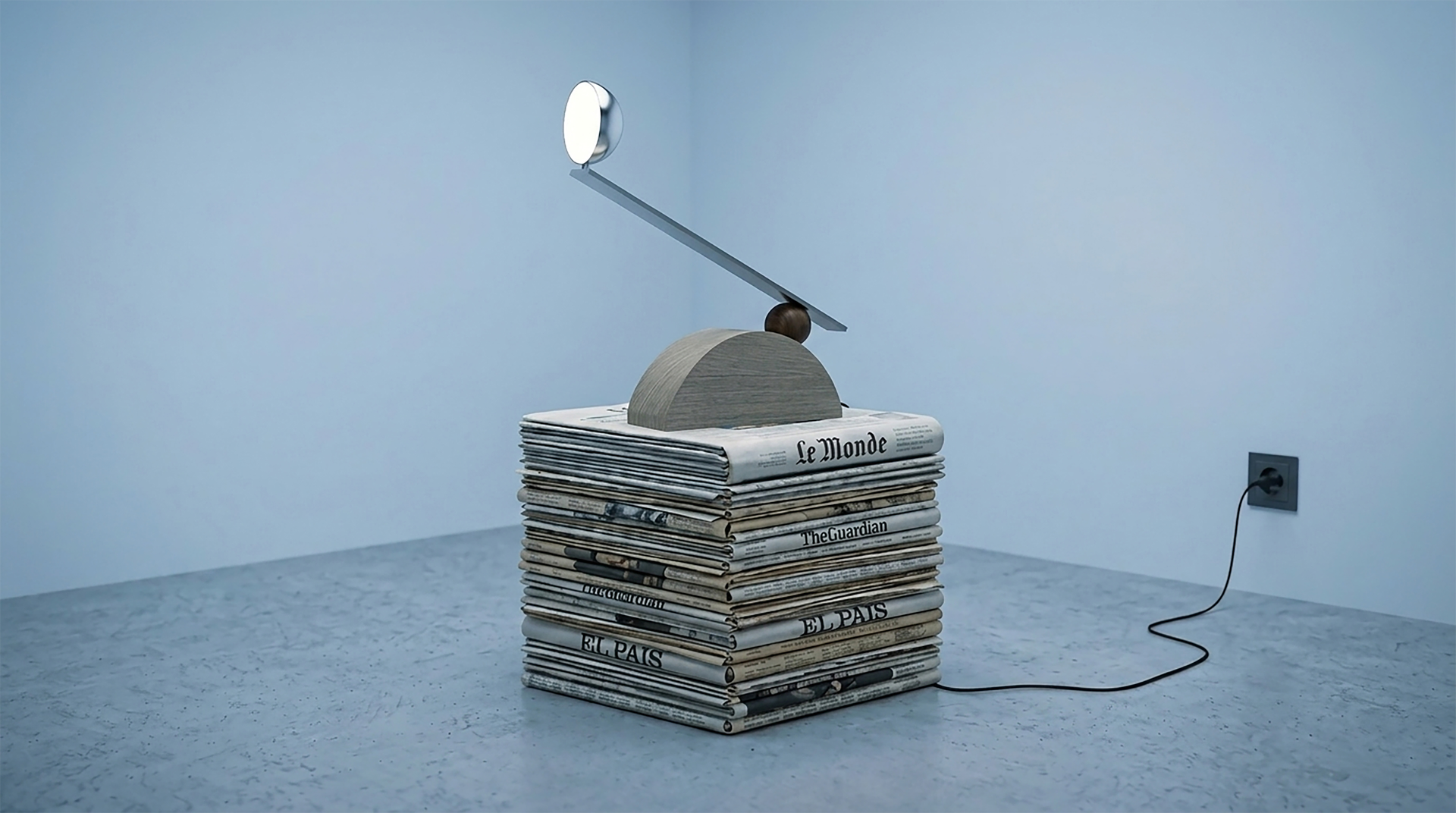
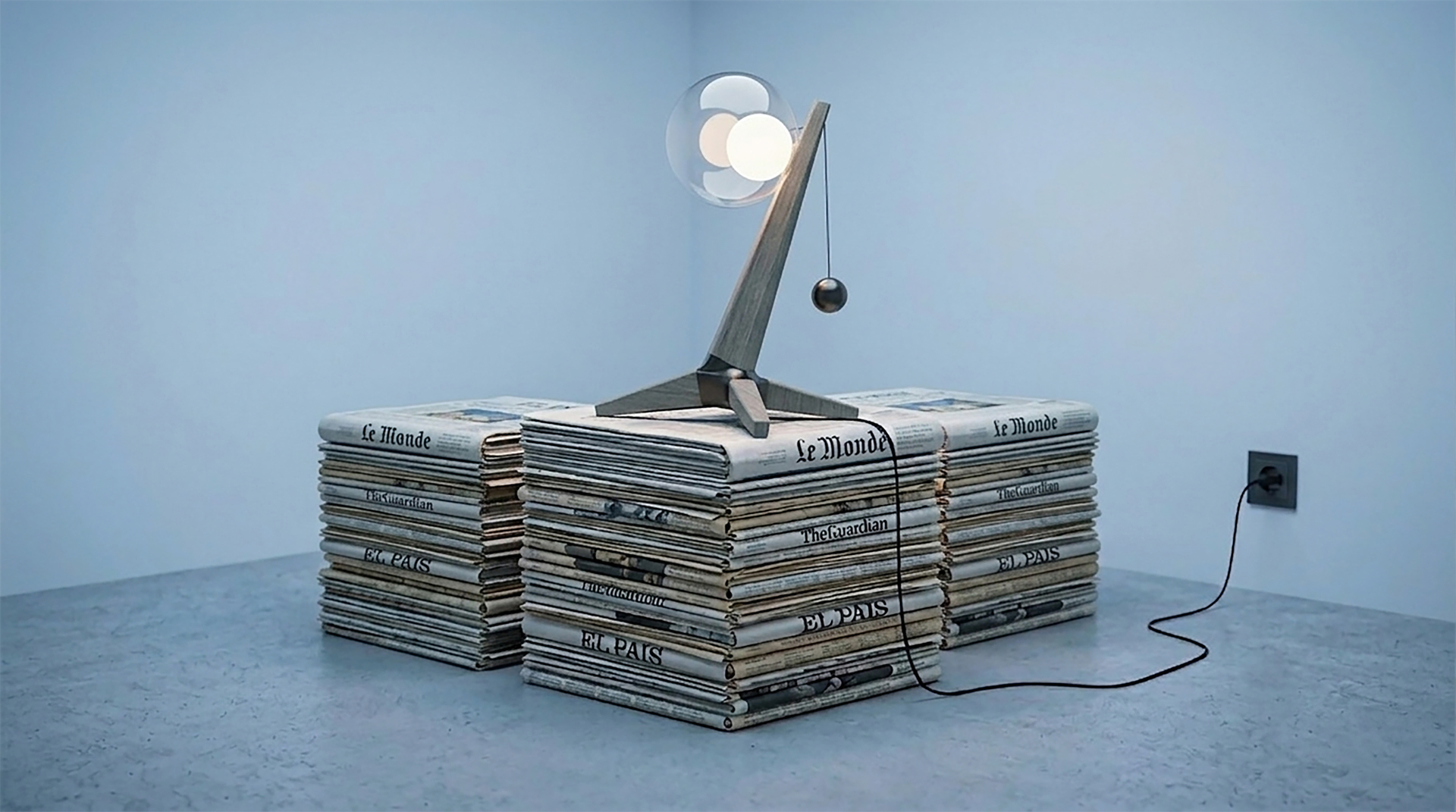
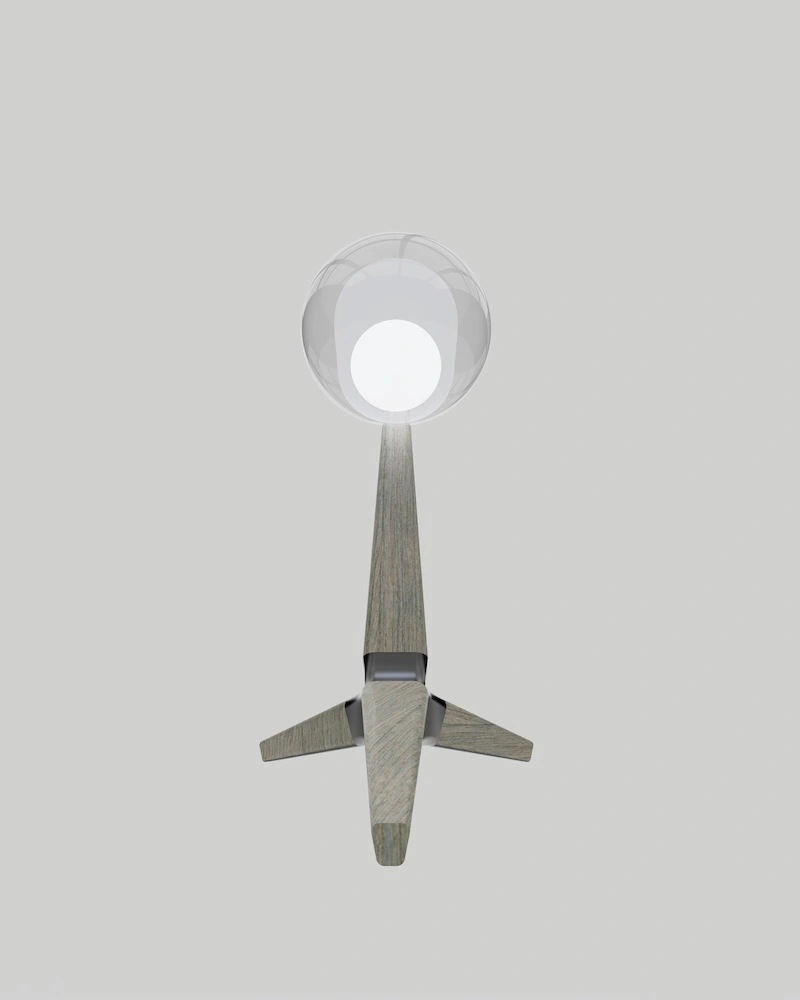
Kinko emerges from unstable balance. From that moment when something seems about to fall, but doesn’t. The piece exists in a state of constant tension: a grounded base that extends outward, an inclined body that elevates the light, and at its end, a suspended element that appears to defy gravity. Everything coexists in a delicate balance, as if the slightest movement could disrupt its stability.
The luminous sphere not only illuminates, but also acts as a focal point. It is a moment of pause within the tension, the element that gives meaning to the composition. Meanwhile, the hanging sphere introduces visual weight and reinforces this sense of uncertainty of a balance that feels fragile, yet is carefully resolved.
Kinko explores the fear of losing balance, but also the ability to sustain it. It is an object that does not seek to impose itself, but to accompany: it inhabits the workspace lightly, generating a soft glow that surrounds the environment without interrupting it.
More than a lamp, it is a constant reminder of tension and control of how harmony can exist even within instability.
the piece
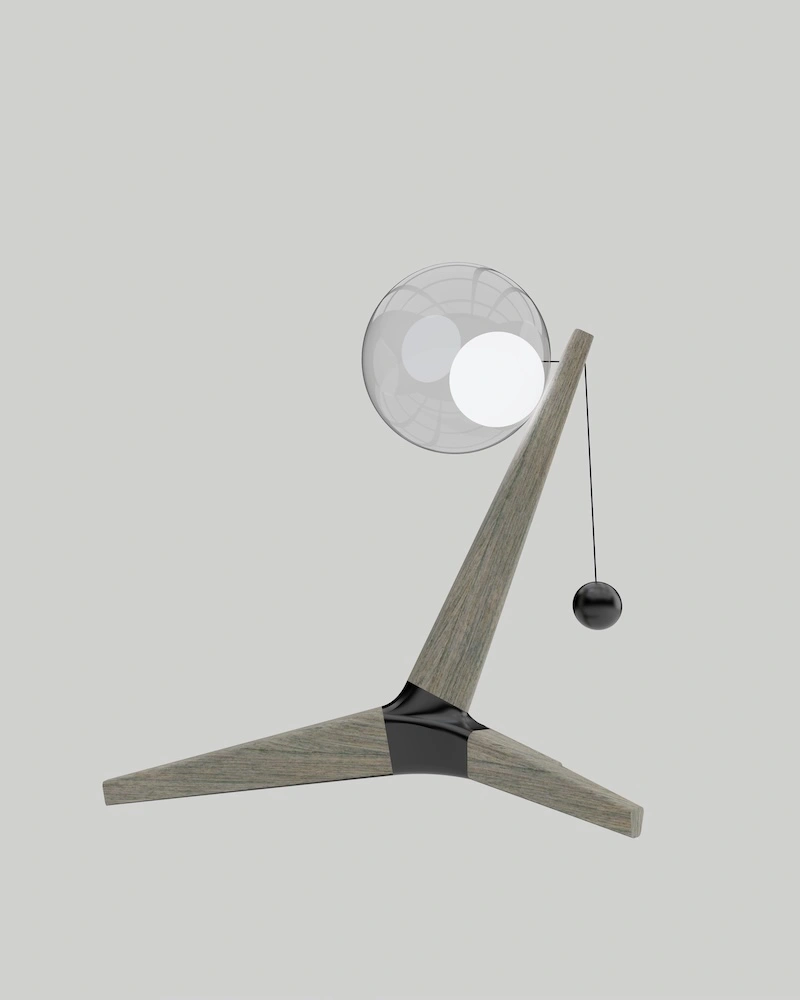
Desk lamp composed of an inclined organic structure that elevates the light source. The base extends into three supports that provide stability, while the main body projects diagonally, creating a sense of visual tension.
At its upper end, a spherical diffuser emits soft, uniform light. From this same point, a spherical volume is suspended by a linear element, adding visual counterweight and reinforcing the concept of balance.
The piece functions as an auxiliary light for workspaces, providing focused illumination without glare.
process
The development of Kinko began with the definition of its proportions at a 1:1 scale, establishing the relationship between inclination, height, and balance. From this stage, the main structure was constructed using newspaper wood, fabricated manually by layering, rolling, and compressing recycled newspaper with adhesive to achieve a resistant yet lightweight material.
The base was designed to extend into three points of support, ensuring stability while allowing the upper structure to project diagonally. Internal reinforcements were integrated to maintain rigidity along the inclined axis. The connecting components, including the joint at the top, were modeled digitally and produced through 3D printing in resin, allowing precision in the articulation of the suspended elements.
The spherical diffuser was integrated at the upper end of the structure, housing the LED light source to produce a soft and uniform glow. From this same point of conection, the suspended sphere was attached through a linear element, carefully calibrated to maintain visual and physical balance within the composition. The electrical system was incorporated internally, with wiring routed through the structure to preserve the visual continuity of the piece. Final assembly involved aligning all components to ensure both structural stability and the intended perception of tension.
The result is a piece that relies on precision in both construction and proportion, where balance is achieved not through symmetry, but through the controlled interaction of opposing forces.
designers
Angela Vera
Brenda Resendez
Camila Islas
Sofia Mota
specs
Main structure: Newspaper wood
Connecting element: 3D-printed resin
Integrated electrical system:
7W LED bulb, 2700K (soft warm-white light):
Integrated electrical system:
projects—Monterrey, N.L., México | 13.05.26
projects